
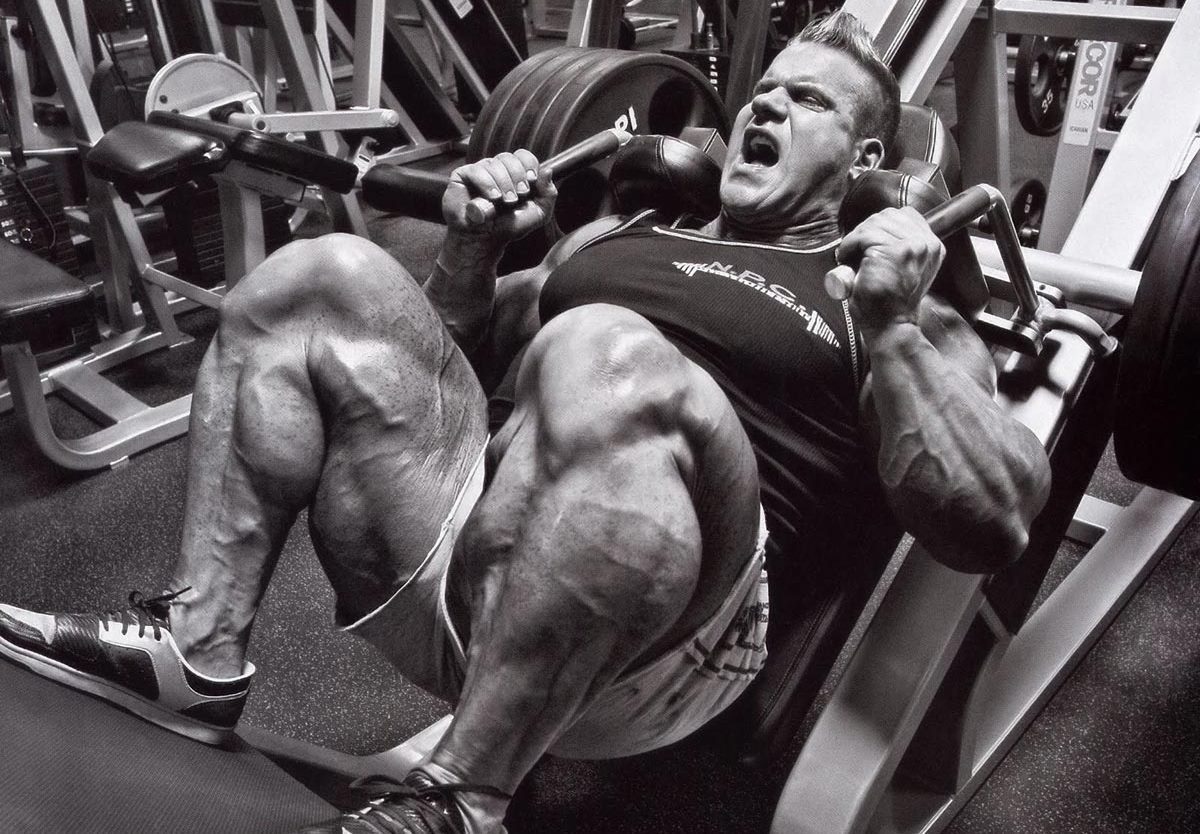
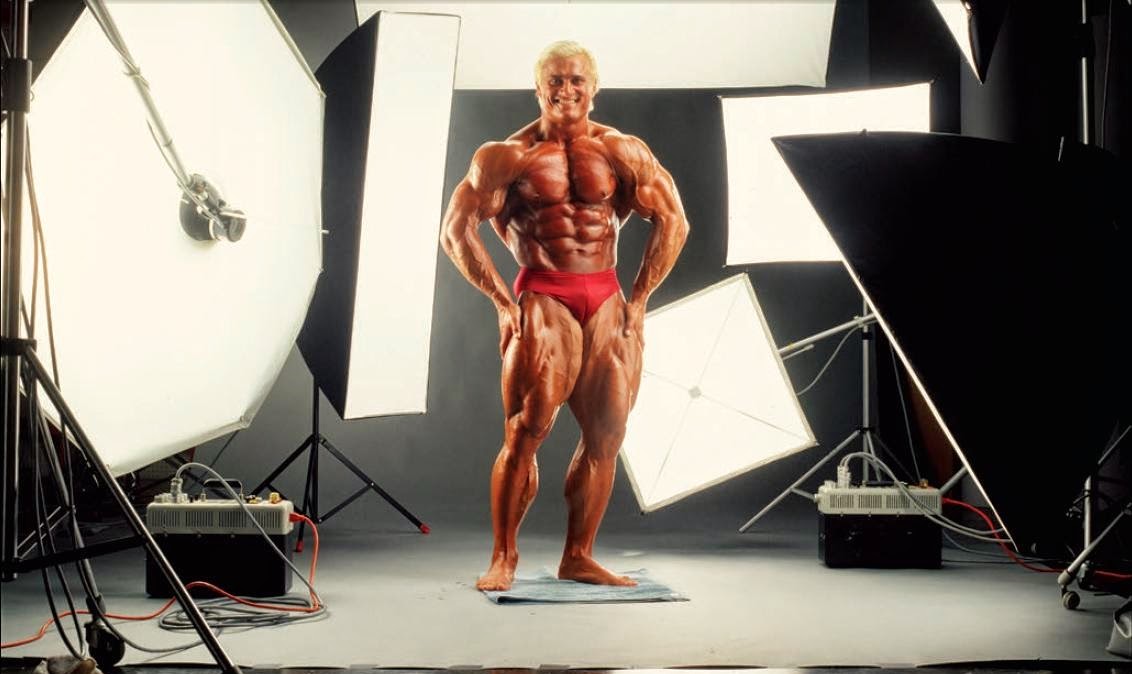
Tom Platz owned perhaps the greatest set of thighs in bodybuilding history. He loved to squat and considered them to be the #1 exercise for building up the legs. His intense leg workouts are revered as some of the most intense in bodybuilding history, and he always employed a radical array of new techniques and methods into his training protocol, some of which have been overlooked by today’s trainers. Partial reps, extreme stretching, and other practices gave Platz the greatest legs of his (or any) generation, but they seem to have fallen by the wayside in the twenty-five years since he last donned the posing dais.
Platz employed a technique which many of today’s experts shun – partial squats. Referred to as “half-squats”, this movement involves starting with the standard squat position, and proceeding to complete the first half of the movement. However, instead of completing the full repetition, the trainer stops halfway down, and returns to the starting position. It’s called a ‘half-squat’ because the trainer only complete half of a squat.
What are the advantages of a half-squat? For starters, this movement allows the trainer to use 20-40% more weight than he could use on a standard full-range squat. Glutes and thighs are emphasized, as opposed to the full-range squat, in which the hamstrings and calves (smaller muscle groups) are brought into plan, and result in set failure quicker. The back, neck, hips, and rest of body become accustomed to holding a greater amount of weight, which is the stalling point for many trainers.
The goal of bodybuilders is to LOOK like you can move a great deal of weight. Since muscular stimulation, and not the amount of weight moveable through a certain range of motion, is the goal, training should be dictated accordingly. For powerlifters, the half-squat would not count in competition. Competitive powerlifting rules dictate that a successful squat is one that “breaks parallel”, or goes deep enough that the thighs are at least parallel to the floor at the lowest descent point. It should just be used as a tool to supplement full squats. Regular squats should not be abandoned for either group, however. Full-range squats provide full-range stimulation to the thighs, glutes, hamstrings, and calves, as well as to the central nervous system, releasing growth hormone into the entire body.
If you feel like your legs aren’t as strong as they could be, or your body cannot seem to handle the load of the heavy barbell, toss in a few sets of heavy squats to your training each month. See if they give you an advantage in stabilization and overall leg development.